Queensland summers aren’t kind to diesel engines. Between long highway climbs, slow-moving traffic, heat-soaked bitumen and towing loads, even the most reliable 4WD can struggle with temperatures when the mercury rises.
Overheating is one of the quickest ways to damage a diesel engine, but the good news is that it’s almost always preventable with proper cooling system maintenance.
Why QLD Heat Punishes Diesel Cooling Systems
Diesels generate more heat than petrol engines due to higher compression and heavy loads. Combine that with SEQ’s 30–40°C summer days, long highway gradients, caravan towing culture, and stop-start traffic — and you get the perfect recipe for overheating if your cooling system isn’t in top shape.
Key Cooling Components That Need Attention
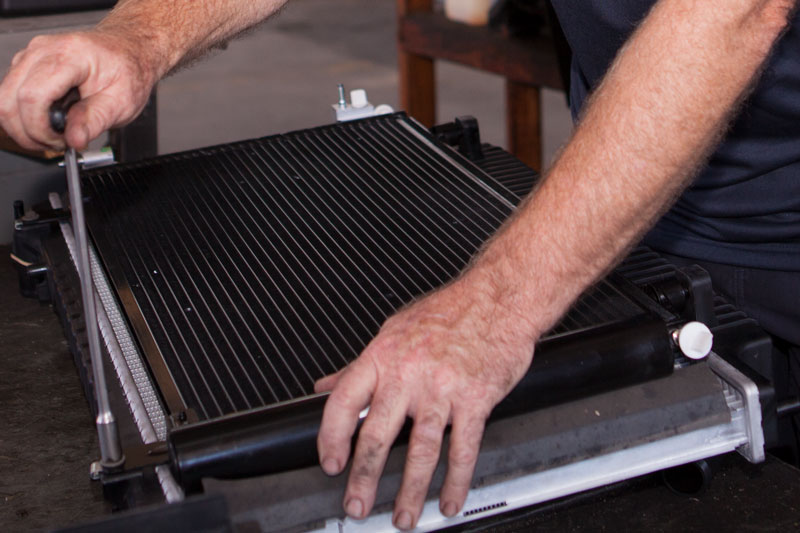
Radiator — commonly suffers from external blockage, internal corrosion, coolant scaling, hot spots, and leaks.
Coolant — old coolant loses its corrosion inhibitors, runs hotter, gels, and damages water pumps and heater cores.
Hoses & Clamps — heat cycles stiffen hoses, leading to bulges or microcracks. A weak hose will burst under towing loads.
Thermostat — a sticking thermostat causes temperature to creep higher under load.
Water Pump — impellers can erode over time, reducing coolant circulation.
Intercooler — dust, mud or bugs on the intercooler face can reduce airflow and send more heat into the cooling system.
Common Overheating Signs to Watch Out For
- Temperature gauge creeping higher on hills
- Coolant smell
- Visible coolant residue around hoses
- Hard hot-starting
- Sudden loss of power under load
- Cooling fans running excessively
- Overflow bottle surging
How Often Should Your Coolant Be Flushed?
Most 4WDs require a coolant flush every 40,000–60,000 km — but SEQ conditions shorten that timeline. Tourers and towers should consider more frequent coolant service intervals.
Preventative Cooling System Services at BB Garage
Every cooling system inspection includes:
- Coolant quality and level check
- Radiator inspection for blockages, leaks, fin damage
- Hose and clamp pressure testing
- Thermostat operation check
- Water pump condition assessment
- Intercooler inspection
- Full pressure testing for leaks
- Honest, real-world advice — we only recommend what your vehicle actually needs
Book a cooling system check with BB Garage before you hit the road.
